An ointment is a thick substance that contains ingredients intended for application on sore or injured skin areas to promote healing. When you mix essential oils with carrier oils, you are basically making an ointment! That's how easy it is.
Here is a method you can use to make a super simple ointment: Melt a small amount of virgin coconut oil and add the essential oils that you want to use. Stir it to mix it all together evenly, then pour into a storage container, allow to cool and then put the lid on.
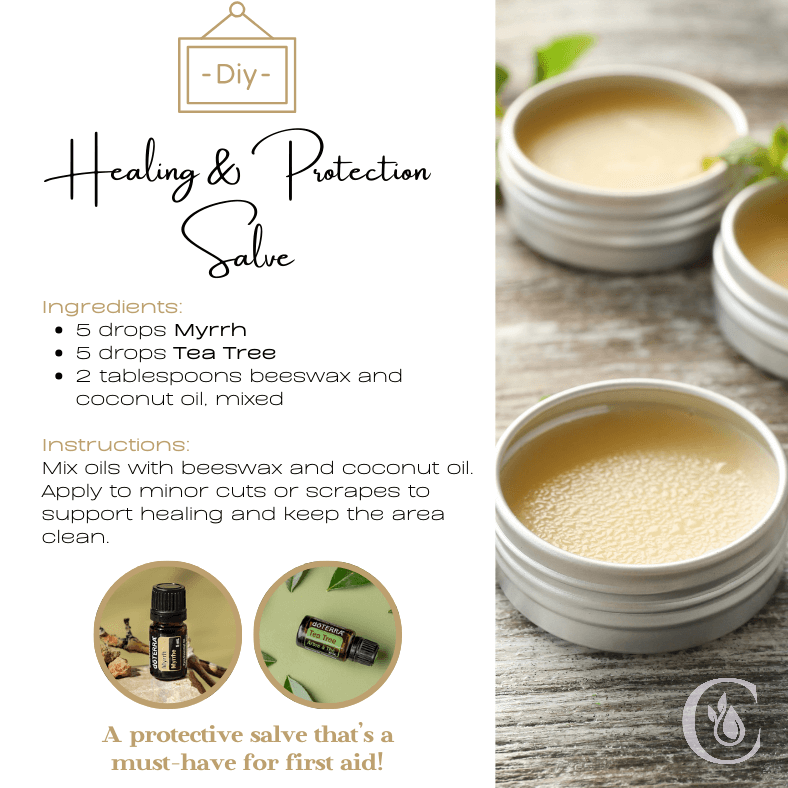
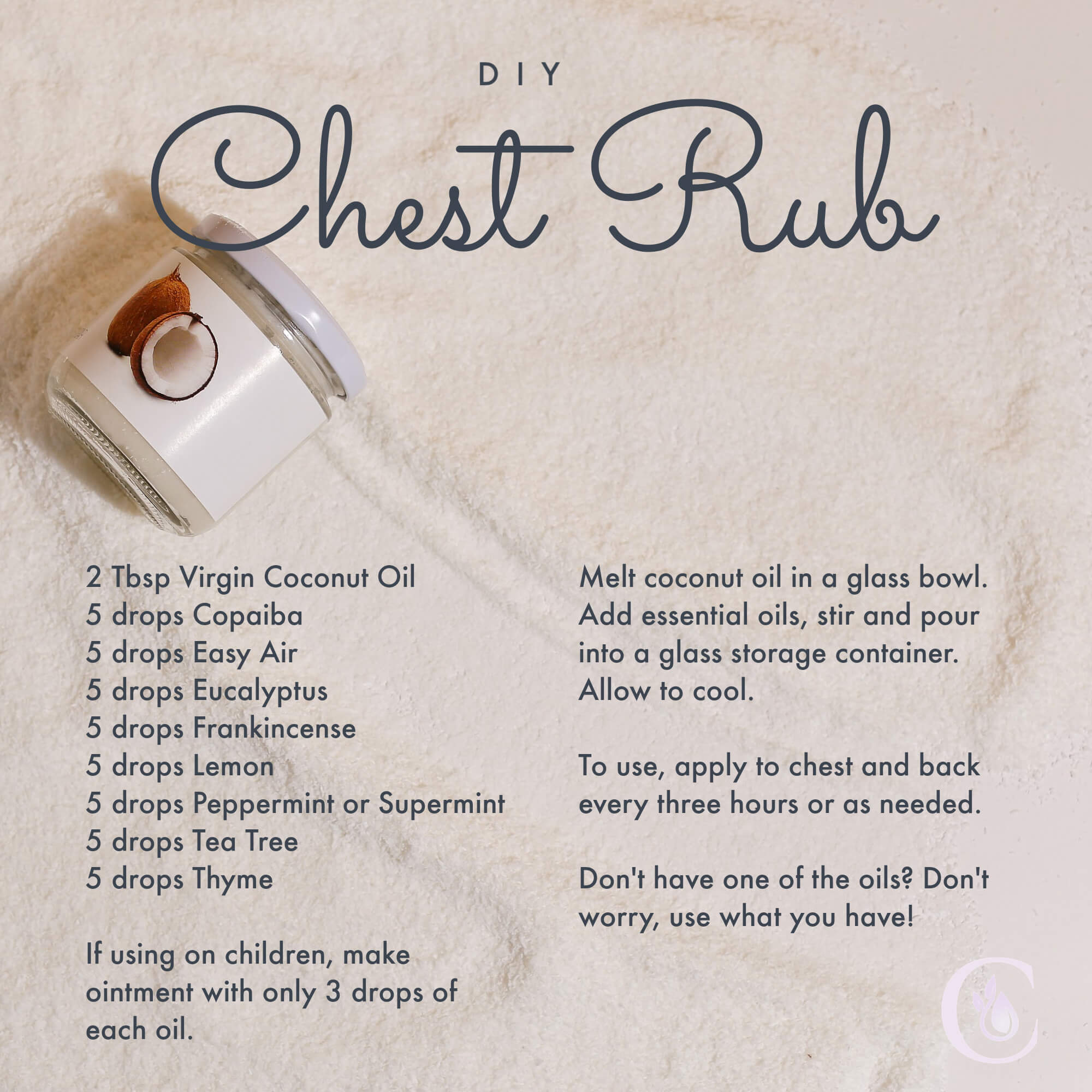
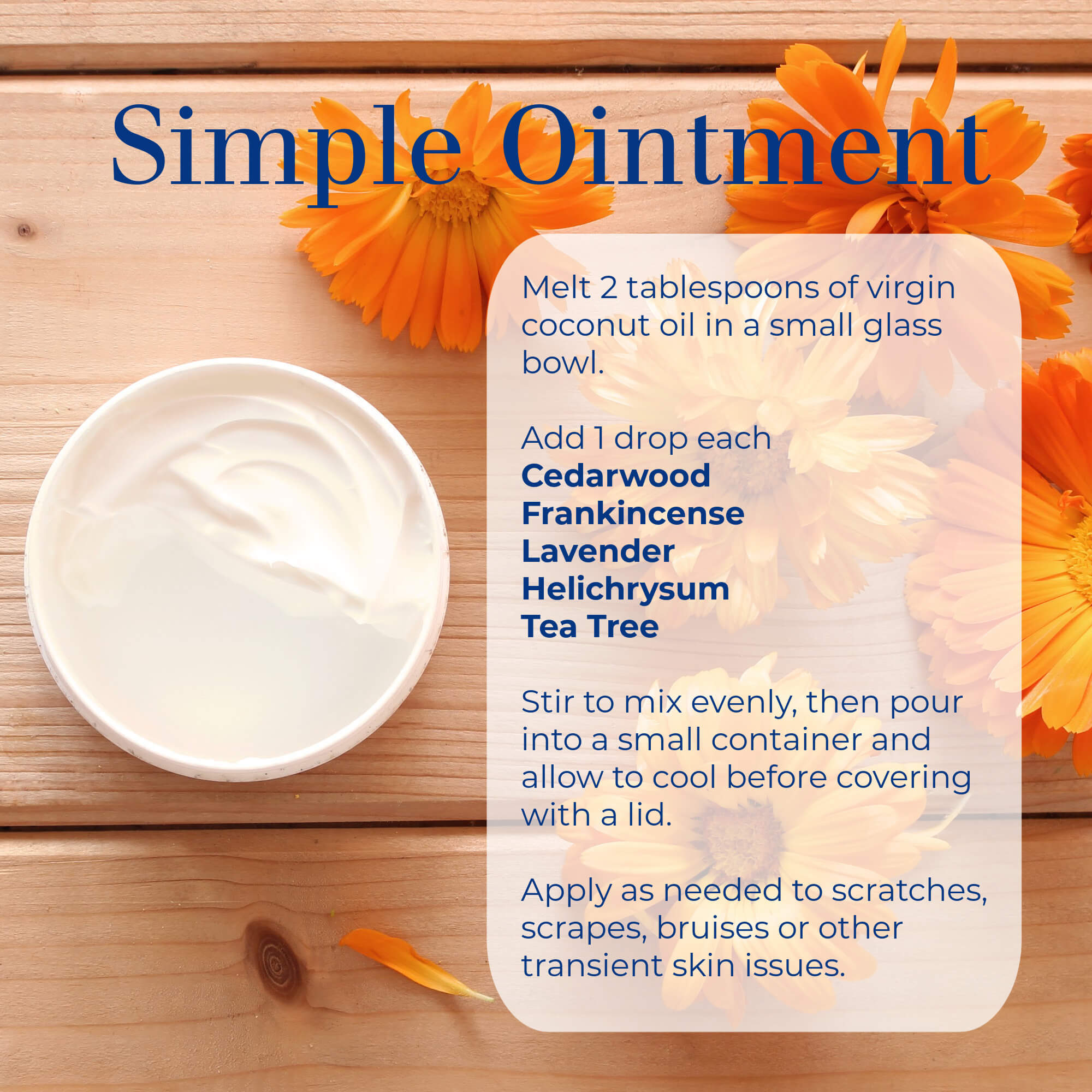
Below are a few recipe "dupes." One is for doTERRA's Correct-X ointment, the second is a natural chest rub that you can use instead of a well known over the counter version, and the third is a protective first-aid ointment that uses beeswax in addition to the virgin coconut oil (another great ingredient for ointments, salves and lotions).
Regarding the first recipe, it's a LOT more cost effective to purchase Correct-X because two of the oils in this product are quite pricey. But, if you have all the oils in your home already, use them to make this simple and effective ointment! If you don't have all the oils, get the tube of ointment and add it to your first aid kit. It is fantastic for anything skin related.
What makes CorrectX a great ready-made ointment?
Why Virgin Coconut Oil?
Virgin coconut oil is the type of coconut oil that is solid at room temperature, and smells like coconut. There are quite a few reasons why I recommend this oil for making your ointments. One reason is that it is very easy to source... you can find it in just about every grocery store and health food store. It's also very easy to handle... it melts at a low temperature and is very shelf-stable. It does not need to be refrigerated and has an extremely long shelf life. As an ointment, it melts easily on the skin and absorbs well. The best reason, though, is that virgin coconut oil has a wide range of medicinal properties! Here are some of the notable benefits of this carrier oil:
Antioxidant properties: VCO is rich in phenolic compounds and medium chain fatty acids, which contribute to its antioxidant properties. This helps combat oxidative stress, potentially reducing the risk of neurological disorders such as Alzheimer's disease and depression.
Antimicrobial effects: The lauric acid in VCO exhibits significant antimicrobial and anti-fungal properties. It can effectively combat harmful microorganisms, including bacteria and fungi, making it useful in treating infections and supporting the immune system.
Anti-inflammatory Effects: VCO has demonstrated anti-inflammatory properties, which can help alleviate conditions characterized by inflammation, such as arthritis or skin conditions like eczema and psoriasis. This makes it beneficial for both internal and external inflammatory issues.
Skin health: Topically, VCO acts as an effective moisturizer and skin barrier enhancer. It can improve skin hydration and is often used for treating dry skin conditions. Its anti-inflammatory properties also aid in soothing irritated skin.
Brain health: The MCTs in VCO are metabolized into ketones, which serve as an alternative energy source for the brain. This property is particularly relevant for neurodegenerative diseases like Alzheimer's, where glucose utilization is impaired.
Cardiovascular benefits: VCO may help improve cardiovascular health by increasing levels of high-density lipoprotein (HDL) cholesterol, often referred to as "good" cholesterol. This can contribute to better heart health and lower the risk of heart disease.
Wound healing: VCO has been studied for its potential in promoting wound healing due to its antimicrobial and anti-inflammatory effects, making it an excellent candidate for topical applications on cuts and abrasions.
With all of these beneficial properties, you can see why virgin coconut oil is a GREAT base for any ointment!